until 1550 Medieval beginnings
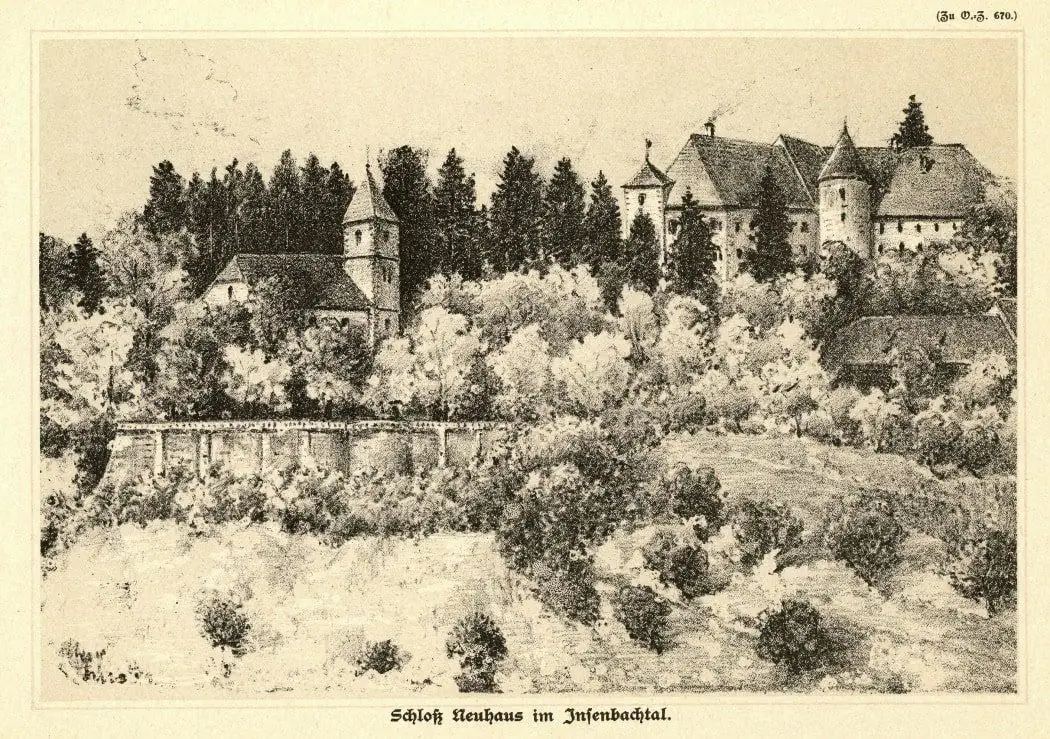
The story begins in the late Middle Ages, when the area around Ehrstädt was shaped by various noble families. The earliest references date back to the 14th century. It was probably around this time that a moated castle was built, serving as a residence, a place of protection and a symbol of prestige, and forming part of a network of small noble castles in the Kraichgau region.
c. 1550 to 1600 The Renaissance remodelling
The turning point came with the renovation carried out by Hans von Helmstatt around the middle of the 16th century. The medieval castle was transformed into a residence of architectural distinction. The castle chapel and the clear geometric layout of the complex are particular testaments to this. Neuhaus became not only a seat of power, but also a cultural statement.
17th to 18th centuries Change through war
The Thirty Years’ War brought devastation, including to Neuhaus. The estate was plundered and damaged on several occasions, and changed hands repeatedly. Parts of the complex were never repaired, and its character as a noble residence faded into the background. This was a period of decline from which the castle would not recover until much later.
19th and 20th centuries Preservation and rediscovery
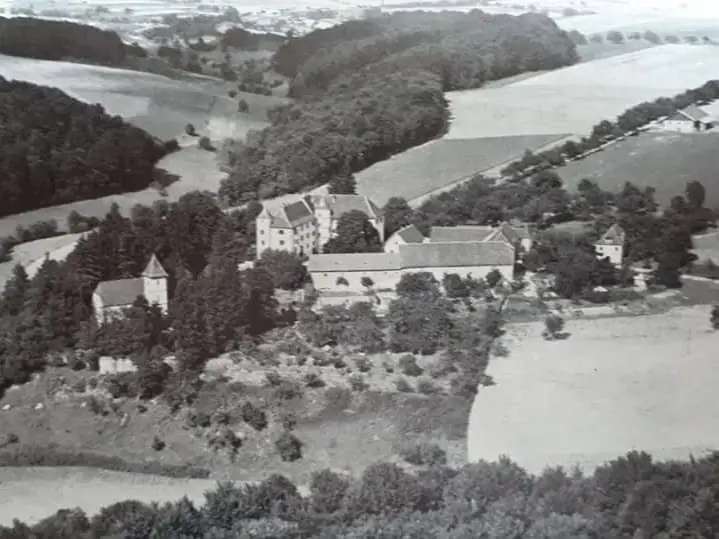
Although the estate was used for farming at times, its historic core survived, protected by its solid construction. In the 20th century, awareness of its cultural and architectural value grew. Restoration work secured the buildings, and loving care preserved their character.
today A living heritage
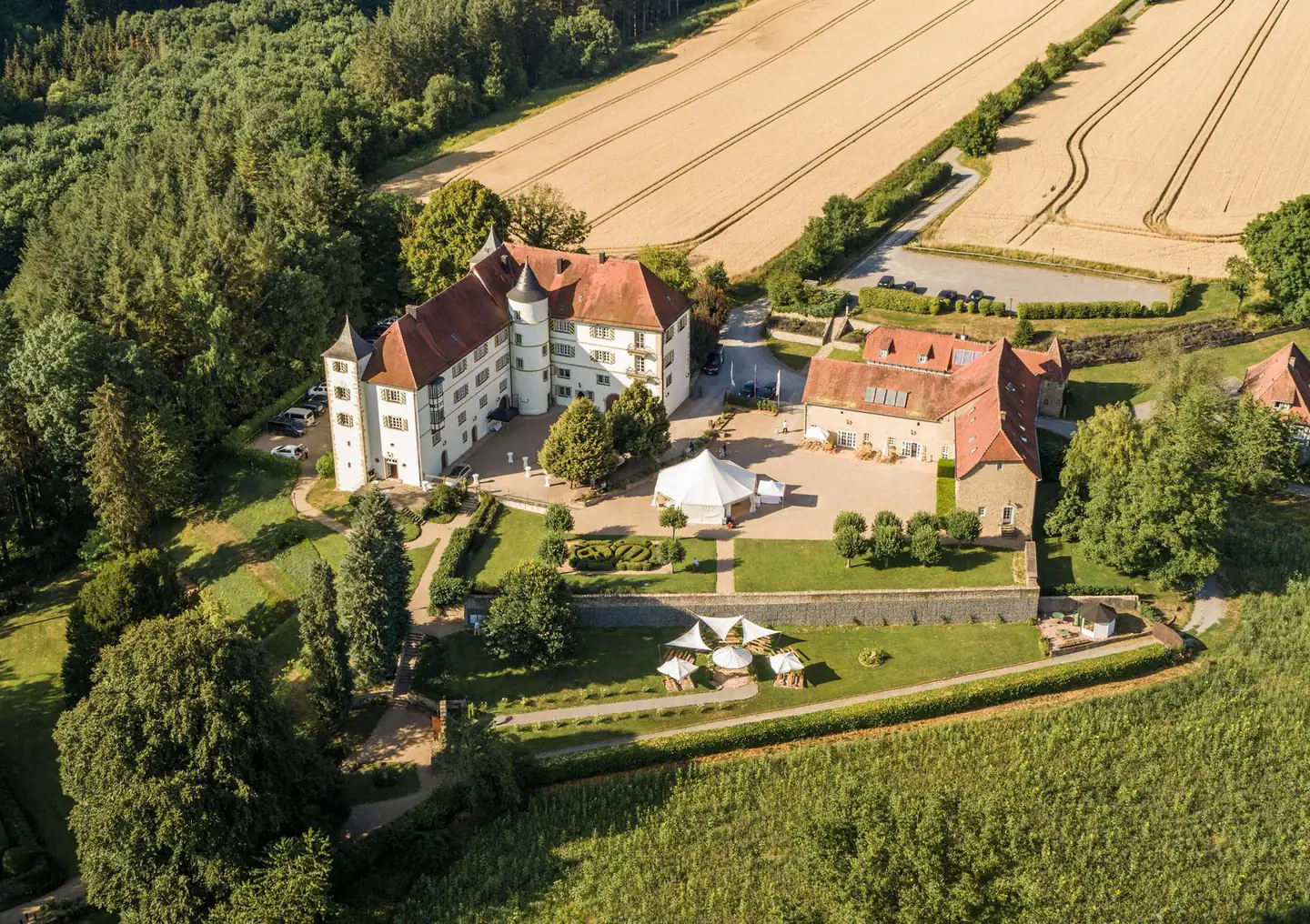
Today, Schloß Neuhaus belongs to the von Gemmingen-Hornberg family and is run as a wedding and event venue. Where estate life and courtly festivities once shaped everyday life, couples, families and businesses now celebrate. A silent witness to times gone by, kept alive by continuing to be used.

 Home to exclusive events